“Inner Moisturizing” Is Marketing: What Really Fixes Dehydrated Skin
Is “inner moisturizing” real, or just marketing? Jamti, a YouTube creator, goes through what actually causes dehydrated skin, why low-molecular hyaluronic acid is overrated, and what to put on your face instead. Here is the short version in Jamti’s own words.
Original video: https://www.youtube.com/watch?v=9ghIkqRyo-U
Original title: 속건조 반대가 속보습이면, 반건조오징어 반대는 반촉촉존잘남임?
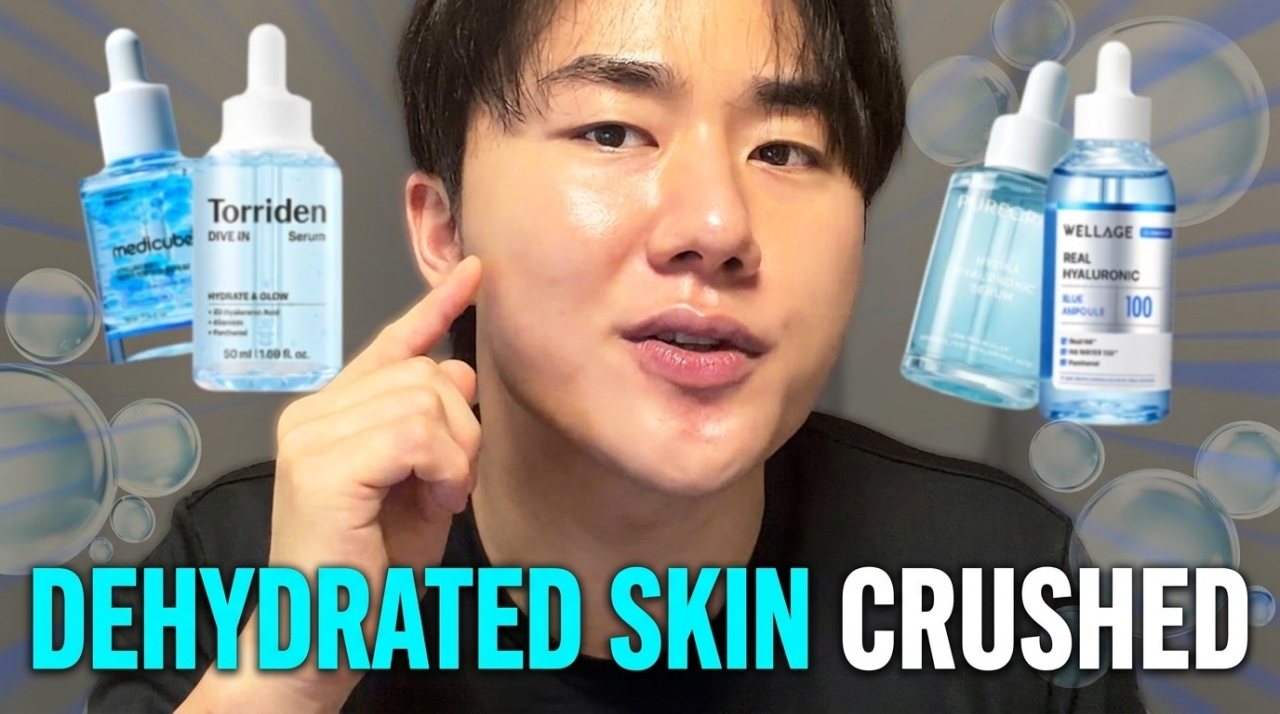
Is “Inner Moisturizing” Real or Just Marketing? 00:10–01:00

Hi, it’s Jamti. Today’s topic is “inner moisturizing” for dehydrated skin. Moisturizing is moisturizing, so what is this “inner” part? Here is how it started. Oily skin got split in two: skin that is only oily, and skin that is oily outside but dehydrated inside, which people call “suboojee” (수부지). To fix that dry inside, the word “inner moisturizing” appeared.
So what exactly is inner moisturizing? It makes you think you need to fill up the water inside, but does that fix dehydrated skin? No. The very idea that you need something called inner moisturizing to fix it is the marketing. Marketing itself isn’t the problem, but this is simply wrong information.
What Causes Dehydrated Skin? Humectants, Emollients and Occlusives 01:00–01:45

According to the papers, the cause of dehydrated skin isn’t a shortage of inner moisture. It’s damage to the skin barrier. The papers even separate plain oily skin from oily but dehydrated skin. So repairing the barrier on the surface comes first, not filling the inside.
Moisturizing is split into three roles: humectants, emollients and occlusives. You need all three for healthy skin. Humectants pull in water, like hyaluronic acid. Emollients soak into the stratum corneum (the outer layer of skin) and make it soft and supple. Occlusives, like Vaseline, put a barrier on the surface so water can’t evaporate.
Does Low-Molecular Hyaluronic Acid Fix Dehydrated Skin? 01:45–02:50

Do you really think slapping on hyaluronic acid day in, day out will fix dehydrated skin? I don’t get why low-molecular hyaluronic acid would. It may be fine for skin, sure, but helping dehydrated skin? That’s just not true. As a humectant that holds water inside, regular high-molecular hyaluronic acid does it better, because it’s bigger.
The upside of the low-molecular kind is that it’s a bit smaller, so it absorbs a bit better. But even that is plenty big. Glycerin, the cheapest and most famous moisturizer, has a much smaller molecular weight. If you want something to get down inside, glycerin does it better. So why pay for expensive low-molecular hyaluronic acid? It may have good sides, but it has no standout advantage over high-molecular hyaluronic acid or glycerin.
Is Low-Molecular Hyaluronic Acid Irritating? What to Use Instead 02:50–03:51

If you like how it spreads and feels, go ahead and use it. I always say that. What you shouldn’t do is make it sound more dramatic than it is. Low-molecular hyaluronic acid is actually bad for redness, and it’s one of the more irritating ingredients. When hyaluronic acid breaks down, those small fragments irritate your skin. A paper did say that irritation may help wrinkles a little, which is why I once said I don’t love it but it may soften wrinkles a bit.
Still, I’d rather use cheap high-molecular hyaluronic acid or glycerin. If those feel sticky, I’d use beta-glucan. It doesn’t cause or worsen inflammation the way low-molecular hyaluronic acid does, it actually calms it with an anti-inflammatory effect, and it has a smaller molecular weight and holds water even better.
Which Ceramide Ratio Repairs the Skin Barrier? 03:51–04:37

So what is dehydrated skin about? Damage to the barrier. The barrier comes first, and the barrier means ceramide, cholesterol and fatty acid. The best-proven mix is a 3:1:1 ratio. Some say 2:4:2 may suit aging skin, but that isn’t proven nearly as well as 3:1:1.
And that’s not 3%, 1% and 1%. It’s the number of molecules, the moles, at 3 to 1 to 1 that gives the maximum effect. The only ingredients that got FDA authorization for acting directly on the barrier structure are the ceramide, cholesterol and fatty acid mix that keeps that 3:1:1 ratio. One sold that way is EpiCeram. I’m not sure whether it’s still sold in Korea, and it’s very expensive, because ceramide is very expensive.
Do Barrier Creams Help Dehydrated Skin? 04:37–05:57

That’s why I keep telling you to use barrier creams. When your skin is at its worst, whether it’s dehydrated skin or anything else, ceramide, cholesterol and fatty acid matter most, so use a barrier cream that contains them. 5% may be the best, but it’s too expensive, so brands put in less. Of the three roles, these work as emollients, stacking the skin barrier like bricks.
Sometimes a very thick cream makes it feel like bugs crawling on your skin. There are two possible reasons: dry stratum corneum twisting against each other, or fine body hair sticking and peeling off so the hair roots wiggle. To fix it, skip the waxy, firm creams and pick a softer one with oil. That doesn’t mean oil-free, since you want plenty of oil, just softer. Or shave off the fine hair.
Anyway, please, just use a barrier cream. It’s good for dehydrated skin, good for moisturizing, good for atopic skin too. Dermatologists often tell you to drop all your cosmetics and use only barrier cream. There’s a reason for that.
Do Thick Creams and Shea Butter Cause Acne? 05:57–06:30

People say shea butter in a cream causes acne, or that it’s bad for oily skin. It might be, but shea butter is usually mixed into the whole cream, so it often won’t break you out. And even a cream made only of non-comedogenic ingredients can cause acne. A firm, waxy cream causing acne? Also no. The one I always hate is IPM, isopropyl myristate. It’s silky and spreads really well, but it’s great at causing acne.
Takeaway 06:30–06:59

Let me be clear: hyaluronic acid isn’t bad. Low-molecular hyaluronic acid can play some role in moisturizing. I don’t love it, but I’m not saying hyaluronic acid itself is bad. For dehydrated skin, ceramide, cholesterol and fatty acid matter most, so barrier cream matters most. Please don’t be fooled by the marketing term inner moisturizing. If you’re going to be fooled, at least get fooled by something good, like beta-glucan. Why do you keep falling for weird stuff?
Common questions
What causes dehydrated skin?
According to Jamti, the cause is damage to the skin barrier, not a lack of moisture inside. Jamti says repairing the barrier on the surface comes first, and calls “inner moisturizing” a marketing term.
Does low-molecular hyaluronic acid help dehydrated skin?
Jamti says no. Jamti says it has no standout advantage over high-molecular hyaluronic acid or glycerin, and that it can irritate skin and worsen redness.
What ratio of ceramide, cholesterol and fatty acid works best?
Jamti says 3:1:1 is the best-proven ratio, counted by number of molecules rather than percentages. Jamti adds that 2:4:2 may suit aging skin but is much less proven.
Do barrier creams help dehydrated skin?
Jamti says yes, because they contain ceramide, cholesterol and fatty acid, which repair the barrier. For a crawling, itchy feeling from thick creams, Jamti suggests a softer cream with oil.
Does shea butter or a thick cream cause acne?
According to Jamti, not necessarily, since shea butter is usually mixed into the whole cream. Jamti says isopropyl myristate (IPM) is the ingredient that is very good at causing acne.
Keep reading
- Thermage vs Ultherapy Thermage vs Ultherapy explained by a Korean dermatologist: depth, who each suits, hollow cheeks, burns, genuine tips and whether either really works.
- How to apply sunscreen correctly How to apply sunscreen the right way: a Seoul National University dermatologist covers wearing it indoors, how much to use, SPF vs PA and mineral vs chemical.
- Why fakes show up on official Amazon listings Fake K-beauty on Amazon usually comes from third-party sellers taking the Buy Box on a real listing. Here's how it happens and how to check the seller first.