Is Eye Cream Worth It? A Korean Dermatologist Explains
Today, I wanted to talk about eye creams. Personally, I do not use a separate eye cream because products around my eyes tend to make my eyes sting. But that is not the only reason. From an ingredient perspective, I have also found that many eye creams are not dramatically different from regular moisturizers or barrier creams. I watched several YouTube videos by Korean dermatologists discussing this topic, and I decided to translate one that I thought explained the point particularly well in a short and straightforward way. Original video: https://www.youtube.com/watch?v=bh_ArPTl0MU The original Korean title of the video is: "Instead of Expensive Eye Cream, Just Apply 'This' to Prevent Wrinkles Around Your Eyes | Why a Doctor Doesn't Recommend Eye Cream" The dermatologist is Dr. Choi Won-jun, who runs the YouTube channel "3분동안 최원준" (3 Minutes with Choi Won-jun). As with the other videos I have translated, if you have the time, I would also recommend visiting his channel and watching the original video yourself. Video summary / translation
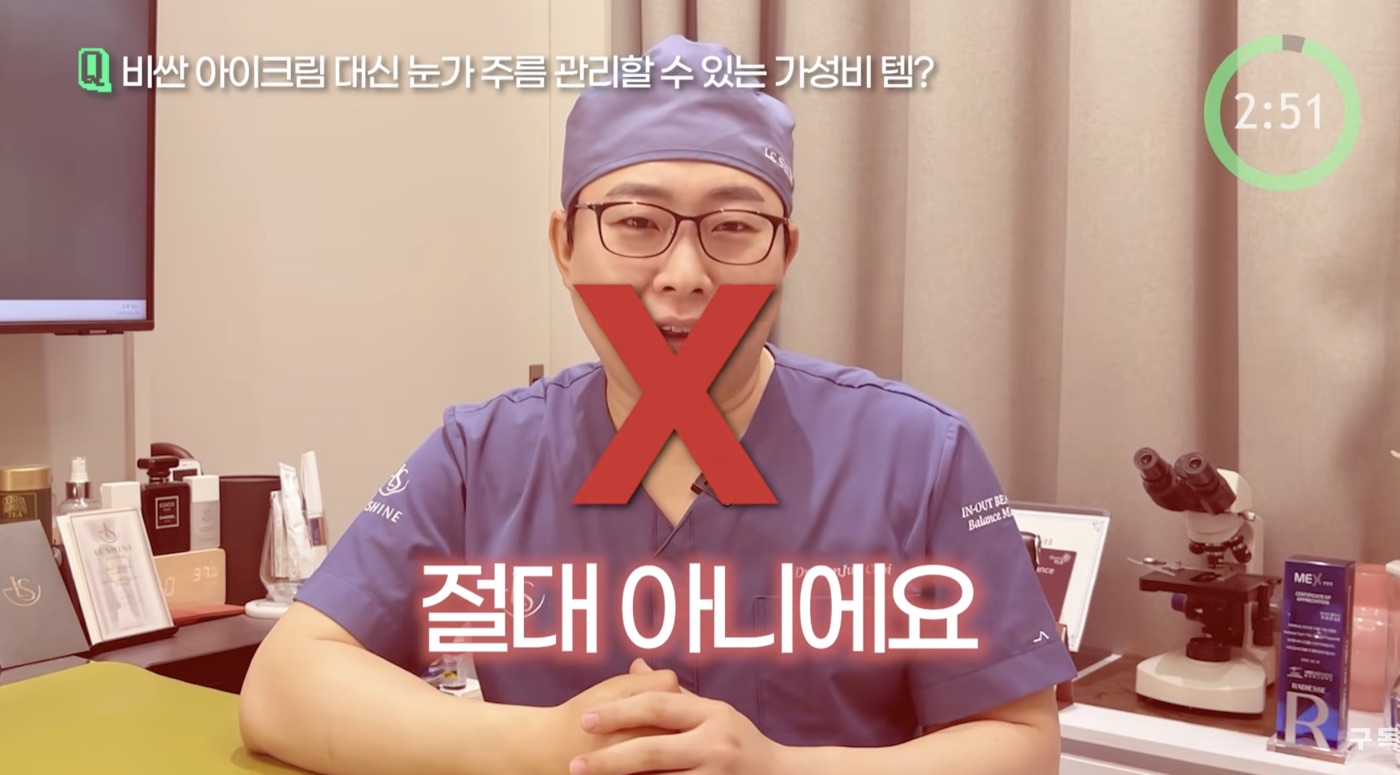
Are Expensive Eye Creams Really Worth the Price? 00:00–01:10
Honestly, I do not think expensive eye creams are worth the money in most cases. Eye creams usually come in tiny containers, yet they are often surprisingly expensive. The reason is fairly simple. Once a product is marketed specifically for the eye area, you are often paying not only for the formula itself, but also for the branding, advertising, packaging, and all the marketing that comes with it. Someone might spend 150,000 won on an eye cream at a department store and then wonder, "Why am I not seeing much of a difference?" When you actually look at the ingredient list, many of these products contain very familiar moisturizing ingredients like hyaluronic acid, glycerin, and panthenol-the same basic ingredients you can find in much more affordable hydrating products at places like Olive Young. In many cases, there really is not a dramatic difference. That does not mean eye cream itself is a bad product. My point is simply that you do not necessarily need to spend a lot of money just to apply common moisturizing ingredients around your eyes. You can find products that serve a similar purpose at the pharmacy for much less, and for basic moisture retention, even something as simple as Vaseline can be a good option.

How Vaseline Helps Lock In Moisture Around the Eyes 01:10–01:55
Vaseline works as an occlusive layer that helps prevent the water already in your skin from evaporating. In the same way that you would normally apply lotion or moisturizer first and then finish with an eye cream, you can use Vaseline as the final step of your nighttime routine after cleansing and applying moisturizer. You only need a tiny amount-about the size of a grain of rice on your fingertip. Apply a very thin layer around the eye area. It can help keep the area moisturized, and because it reduces moisture loss from the skin, it may also help with preventing dryness-related fine lines over time. It is also extremely inexpensive. A jar can cost around 3,000 won, so even if you use it once a day, you are spending less than about 10 won per application. That can be a fraction of the cost of an expensive eye cream. But just because it is cheap does not mean you should apply a thick layer. If you use too much, you may develop issues like milia or breakouts, especially if the product feels too heavy for your skin. The key is to apply only a very thin layer.
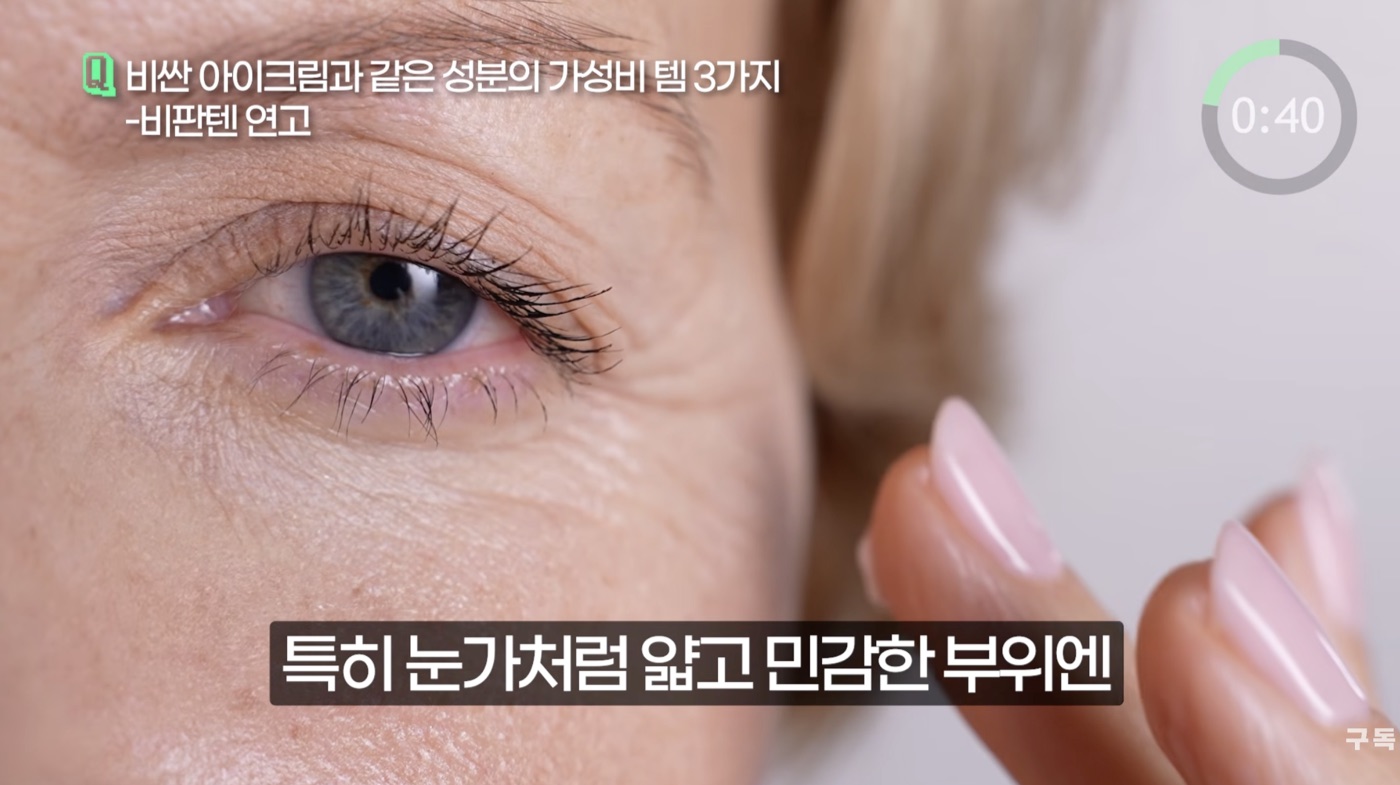
Panthenol 01:55–02:50
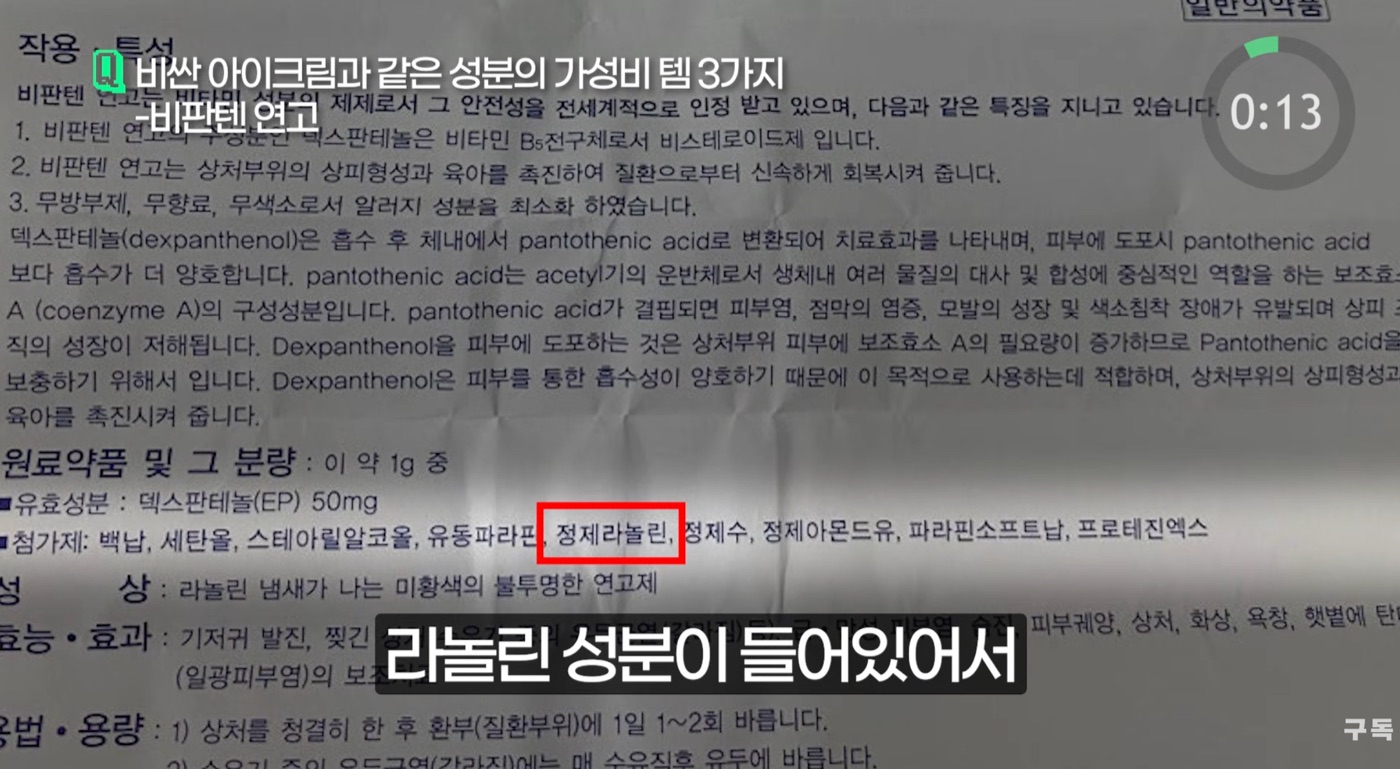
The second option I want to talk about is Bepanthen.(Editor's note: Bepanthen is an over-the-counter product commonly sold in Korea. It is essentially an ointment containing panthenol, so the important point here is the panthenol ingredient itself rather than the specific brand.)It is the kind of ointment people often reach for at the pharmacy when their skin is irritated or damaged, but it also contains an ingredient that can be relevant to some of the things people expect from eye creams, such as soothing and supporting skin recovery. The key ingredient is dexpanthenol, which is a form of panthenol. Panthenol can help soothe the skin, support the recovery of irritated or damaged skin, and help strengthen the skin barrier. Because the skin around the eyes is thin and sensitive, it can be a useful ingredient in that area as well. Another advantage is that ointment formulations like this tend to be relatively simple and are often used specifically on irritated skin. To use it, you can apply your moisturizer after cleansing at night, then take a very small amount of the ointment and dab an extremely thin layer around the eye area. Because the texture is quite thick and a little sticky, it may not be very comfortable under makeup during the day, so I generally recommend using it at night. It also contains lanolin, so if you have sensitive skin, it is a good idea to patch-test it first rather than applying it directly around your eyes right away.
Takeaway 02:50–03:00
Ultimately, when it comes to caring for the eye area, what matters more than buying expensive products is consistently using a few basic products that work well for your own skin. Using something familiar and simple, such as Vaseline or a panthenol-based ointment, in a very thin layer and in the right order can also be a perfectly reasonable approach. Just remember that Vaseline is mainly there to form an occlusive layer and reduce moisture loss, while products like Bepanthen are thicker ointment formulations. Applying more does not make them work better. You still have to consider the possibility of irritation, heaviness, or breakouts, especially around such a delicate area.
(Editor's note: This video is quite short, but what other Korean dermatologists say about eye creams tends to be very similar. Many of the key ingredients commonly highlighted in eye creams-such as retinol, panthenol, hyaluronic acid, peptides, and Matrixyl-are also widely used in regular serums, moisturizers, and barrier creams. In fact, because the skin around the eyes is thinner and more delicate than the skin in many other areas, some dermatologists point out that eye-area products may actually contain lower concentrations of certain active ingredients. There are also Korean YouTube Shorts with titles along the lines of "The Most Useless Skincare Product, According to a Dermatologist," where the dermatologist's answer is simply: eye cream. Of course, different dermatologists may have slightly different opinions, but the overall message seems fairly consistent: you probably do not need to spend a lot of money on multiple specialized eye creams.)
P.S. After mentioning the Discord channel (https://discord.gg/3zQkUJG598) in my previous post, several people asked whether there was a place to browse the translations more easily. So I put together a simple archive at https://beautysuda.com/, where I’ll be collecting the translations I’ve shared here. Some posts may also include images or supplementary material that did not fit well in a Reddit post. Thank you, as always, for reading.
Common questions
Is eye cream worth it?
Dr. Choi says expensive eye creams usually aren’t worth the money. Once a product is marketed for the eye area, you often pay for branding, advertising and packaging as well as the formula, and many contain familiar moisturizing ingredients like hyaluronic acid, glycerin and panthenol that you can find in much more affordable hydrating products. He adds that this doesn’t make eye cream a bad product, only that you don’t necessarily need to spend a lot.
What can I use instead of eye cream?
He suggests two cheap options: Vaseline as an occlusive final step at night, or a panthenol-based ointment such as Bepanthen. Both go on in a very thin layer after cleansing and moisturizer.
How much Vaseline should I put around my eyes?
About the size of a grain of rice on your fingertip, applied as a very thin layer. He warns that too much can lead to milia or breakouts, especially if the product feels too heavy for your skin.
What does the dermatologist say about Bepanthen around the eyes?
He says the dexpanthenol (a form of panthenol) in it can soothe skin, support the recovery of irritated or damaged skin and help strengthen the skin barrier, which can be useful for thin, sensitive eye-area skin. The ointment is thick and a little sticky, so he recommends it at night. It also contains lanolin, so if you have sensitive skin he advises patch-testing before applying it around your eyes.
Do other Korean dermatologists say the same thing?
The translator notes that what other Korean dermatologists say tends to be very similar. Many ingredients highlighted in eye creams, such as retinol, panthenol, hyaluronic acid, peptides and Matrixyl, are also used in regular serums, moisturizers and barrier creams, and some dermatologists point out that eye-area products may contain lower concentrations of certain actives. Opinions can differ slightly between dermatologists.
Keep reading
- Should you use a sheet mask every day? Is it OK to use a sheet mask every day? Korean doctor Lee Sang-wook explains when a daily mask is fine, when it backfires, and how often to use active masks.
- Does topical PDRN actually work? Does PDRN work in creams and serums? A Korean doctor explains why topical PDRN struggles to pass the skin barrier and reach the dermis. English translation.
- Korean skincare tips from beauty nerds (TheQoo) Korean skincare tips from a long-pinned TheQoo post: eight points from a Korean beauty nerd on routines, pricey products, ingredients and DIY. Translated.