Can You Use a Sheet Mask Every Day? A Korean Doctor Explains
If you spend enough time looking through skincare routines on TikTok, you will find that opinions on using a sheet mask every day are quite divided.
A Korean doctor uploaded a well-organized video about daily sheet masking on YouTube. Since it does not seem to be widely known outside Korea, I translated the main points here. I only adjusted some conversational phrasing into a more readable written form while keeping the original message and flow as intact as possible.
As always, take what is useful and feel free to leave the rest :)
You can watch the original video here:
https://www.youtube.com/watch?v=sNSWMuWAzJ8
Original video title:
One Sheet Mask a Day! “If You Use a Sheet Mask Every Day… Is It Really Good for Your Skin?”
Here’s the translation:
Video summary / translation
Is It Okay to Use a Mask Every Day? 00:00–01:03
When people think about skincare, a sheet mask is one of the first things that comes to mind. That naturally leads to the question I hear all the time: “Is one sheet mask a day actually okay?”
My answer is simple. I do not think using one sheet mask a day is automatically a bad thing. We shower every day, and we apply lotion and cream every day. In the same way, it can be perfectly reasonable to make a hydrating sheet mask that agrees with your skin part of your routine. The problem starts when people see the word “daily” and treat every type of mask in exactly the same way.
What a Sheet Mask Actually Does 01:03–02:35
Skincare products can evaporate into the air or dry out quickly after you apply them. A sheet mask covers the skin and slows that down. In other words, it keeps the formula in contact with the skin for longer. Put simply, it creates an occlusive environment.
Hydrating masks may contain ingredients such as hyaluronic acid or AQUAXYL™, while other masks are formulated for concerns such as brightening or soothing. A mask is not some kind of special magic. It is simply a way to keep the ingredients you want in contact with the skin for a little longer.
The Issue Is Not Daily Masking Itself, but a Formula That Does Not Agree with You 02:35–04:15
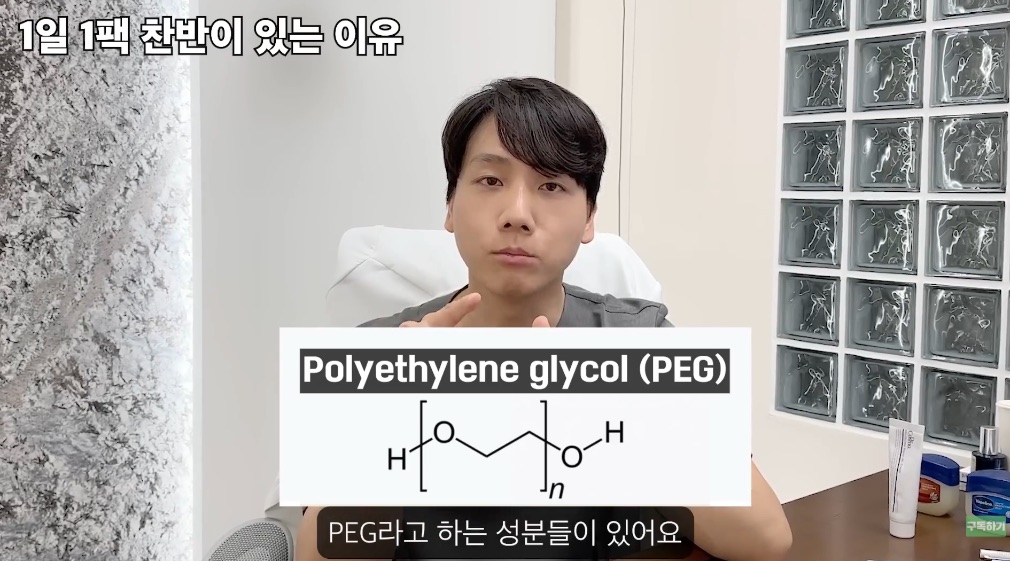
If a lotion does not agree with your skin, you can break out. The same goes for a mask. Products may contain PEGs, glycols, and other ingredients to improve texture and spreadability. That does not mean those ingredients are inherently bad. But some people can find certain ingredients irritating.
Because a mask keeps the formula pressed against the skin, repeatedly using a formula that does not agree with you can lead to breakouts or increased sensitivity. So before asking whether you should use a mask every day, ask the more important question first: “Does this particular product agree with my skin?”
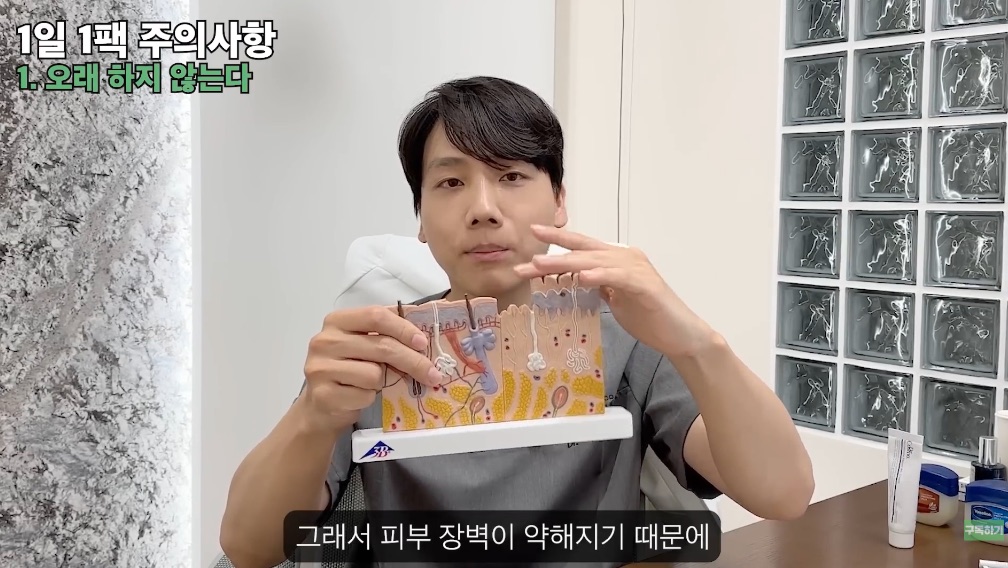
Leaving a Mask on Longer Does Not Make It Better 04:15–06:25
If you leave a mask on for a long time, your face can look temporarily brighter and clearer. It is similar to how your hands look when they have been in a sauna for too long: the skin has absorbed a lot of water. It may look nice for a moment, but taking it too far can weaken the skin barrier. When the skin becomes overly waterlogged, the outer barrier can become more vulnerable, leaving it more prone to irritation.
That is why I do not recommend leaving a mask on for a long time. In particular, do not fall asleep with a sheet mask on. The sheet eventually dries out. Once it is dry and stays on the skin, it can contribute to moisture loss and leave your skin drier and more sensitive by morning. Ten to fifteen minutes is enough for a hydrating mask.
There Are Gentle Masks and There Are “Spicier” Ones 06:25–08:00
Masks made mainly for hydration tend to be gentler. If your skin is healthy and you do not usually have a major reaction when you switch products, I do not object to using this kind of hydrating mask every day.
But masks that strongly target concerns such as brightening or wrinkle care need to be viewed a little differently. I think of these as the “spicier” kind. The active ingredients may already be more intense, and then you are keeping them against the skin under occlusion. Just as eating spicy food every day can upset your stomach, using these kinds of masks every day can upset your skin. For a treatment mask with more potent active ingredients, once or twice a week is enough in my view.
If Your Skin Is Red, Stinging, and Bumpy, Focus on the Barrier First 08:00–11:00
If your face is red, covered in tiny bumps, and stings, you usually know it. Those can be signs that your skin barrier is compromised. When people notice their skin looking rough, many of them reach for a mask immediately. I think the order should be the other way around.
When the barrier is weak, the priority is barrier repair, not adding more stimulation. Use a barrier-repair or recovery cream, get enough sleep, drink less alcohol, and manage your stress. It is easy to say and not always easy to do. If your condition is severe enough to need medical treatment, you may need help from a clinic, including prescription oral medication.
Honestly, I Find Sheet Masks a Bit of a Hassle 11:00–12:37
Honestly, I find the whole process of opening a sheet, fitting it to my face, and waiting around a little tedious. So sometimes I soak cotton pads in green tea and place them on my face for five to ten minutes. It is a simple, short hydrating step, and then I take them off.
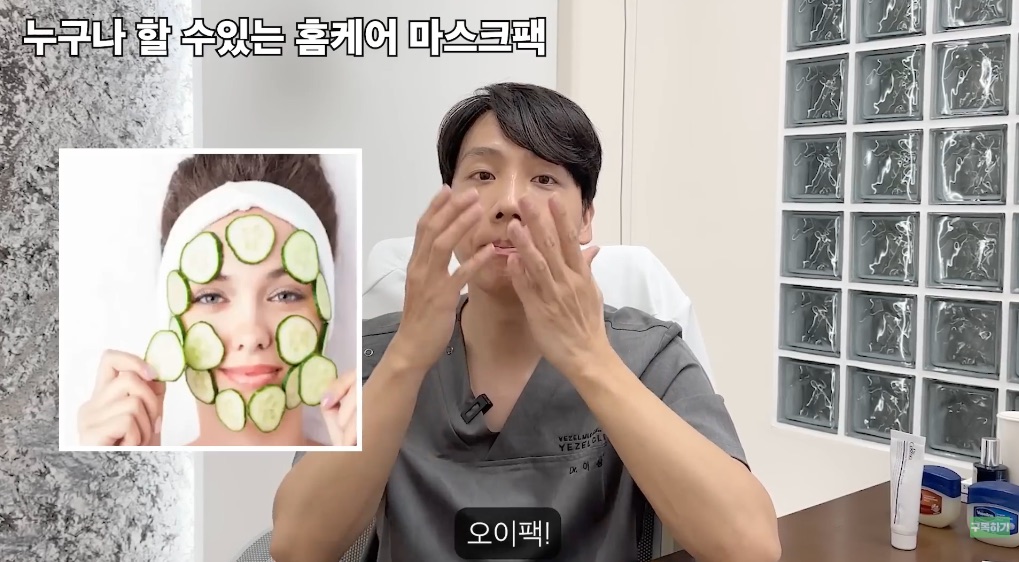
Another option I think about is applying a cream that already works well for me and briefly covering it with plastic wrap. One of the key ideas behind a mask is occlusion, after all. Plastic wrap feels stuffy enough that you are unlikely to fall asleep with it on, and you will usually take it off after five to ten minutes. If brightening is your goal, you could also place cucumber slices on the skin and cover them with a sheet mask.
Many of us have seen our mothers apply cream and cover it with plastic wrap at least once.
What You Use and How You Use It Matter More Than Doing It Every Day 12:37–13:24
Not every sheet mask on the market is made with the same quality of ingredients. Unless you are buying a very premium product, some masks may contain a larger share of lower-cost ingredients. That sometimes makes me wonder whether a daily mask is really necessary. Would it not be better to use the skincare products that already agree with you consistently, then add a short period of occlusion if you want it?
I also find a simple green tea mask more appealing from an ingredient standpoint.
My rule of thumb is this:
• If your skin is healthy: A gentle hydrating mask can be used every day. Just take it off within 10 to 15 minutes.
• If your skin is red, stinging, or sensitive: Do not reach for a mask first. Focus on restoring the skin barrier.
• If you are using a mask with stronger active ingredients for concerns such as brightening or wrinkles: Use it once or twice a week rather than every day.
• Above all: Read the full ingredient list. If an ingredient has caused breakouts or irritation for you before, avoid that mask no matter how popular it is.
Common questions
Can you use a sheet mask every day?
The doctor says one sheet mask a day isn’t automatically bad. We shower and apply lotion and cream every day, so a hydrating mask that agrees with your skin can be part of a daily routine. The problem starts when people treat every type of mask the same. With healthy skin a gentle hydrating mask is fine daily, while stronger treatment masks are better once or twice a week.
How long should you leave a sheet mask on?
He says ten to fifteen minutes is enough for a hydrating mask. Leaving it on much longer can make the skin overly waterlogged, which can weaken the skin barrier and leave it more prone to irritation.
Is it bad to sleep with a sheet mask on?
Yes, he recommends against it. The sheet eventually dries out, and if it stays on the skin it can contribute to moisture loss and leave your skin drier and more sensitive by morning.
How often should you use a brightening or anti-wrinkle sheet mask?
He calls masks that strongly target concerns like brightening or wrinkle care the “spicier” kind. Their active ingredients may already be intense, and the mask keeps them pressed against the skin. For a treatment mask with more potent actives, he says once or twice a week is enough.
What if your skin is red, stinging and bumpy?
Those can be signs that your skin barrier is compromised. He says the priority is barrier repair, not more stimulation: use a barrier-repair or recovery cream, get enough sleep, drink less alcohol and manage stress. If it is severe enough to need medical treatment, you may need help from a clinic.
Are there simpler alternatives to a sheet mask?
He mentions soaking cotton pads in green tea and placing them on the face for five to ten minutes, or applying a cream that already works for you and briefly covering it with plastic wrap for five to ten minutes. For brightening, he suggests cucumber slices covered with a sheet mask.
Keep reading
- Korean skincare for dry skin: '25–'26 picks Korean skincare for dry, dehydrated and sensitive skin: the products 137 Korean beauty nerds recommended most in TheQoo's 2025 survey, translated.
- Is eye cream worth it? Is eye cream worth it? Korean dermatologist Choi Won-jun explains why most eye creams work like a regular moisturizer, and what to use instead.
- Does topical PDRN actually work? Does PDRN work in creams and serums? A Korean doctor explains why topical PDRN struggles to pass the skin barrier and reach the dermis. English translation.