Ultherapy vs Thermage: What a Dermatologist Would Pick
Thermage vs Ultherapy: which expensive lifting treatment should you book? Dr. Filler, a Korean dermatologist, explains how the two differ, which face each one suits, the side effects, and the genuine-tip controversy, and says what they would honestly choose.
Original video: https://www.youtube.com/watch?v=x0d7zTmmmCI
Original title: (*Eng) 울쎄라 VS 써마지 효과, 부작용? 솔직히 저라면요... Ulthera vs Thermage - 피부과전문의 [닥터필러]
What Is the Difference Between Ultherapy and Thermage? 00:27–01:23
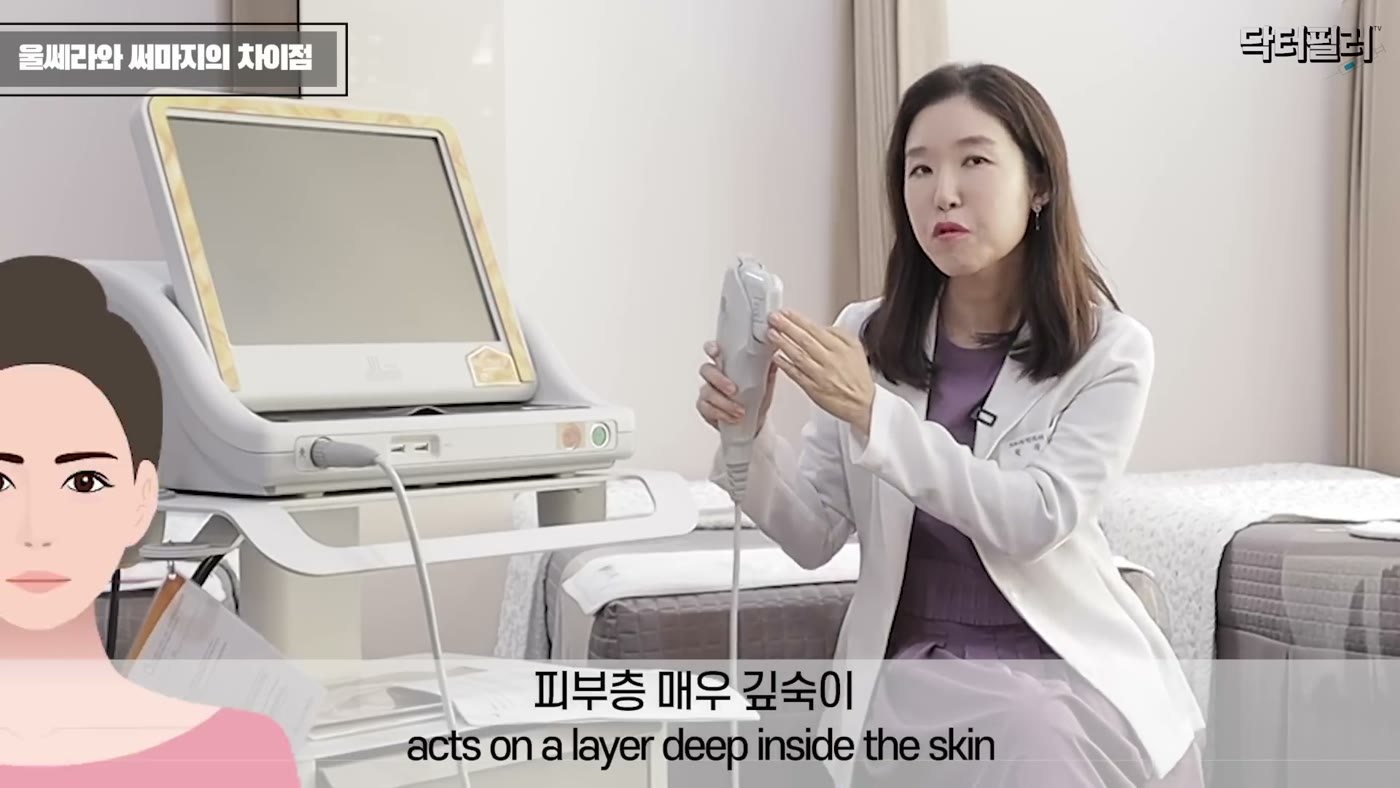
Let’s start with the difference. Ultherapy uses ultrasound heat that goes very deep, into the layer between the skin, fat and muscle called the SMAS, the fascia layer. The heat is gathered there into tiny heat points that tighten the skin and even pull it upward.
Thermage uses radiofrequency heat instead, and it works much shallower, in the dermis right below the epidermis. It spreads heat evenly through the skin so collagen keeps popping up. In a nutshell, Ultherapy goes deep and is closer to a contouring treatment, designing the face line. Thermage goes shallower and is closer to a firming treatment for bouncy skin.
Ultherapy or Thermage: Which One Suits Your Face? 01:23–02:24

I look young for my age, but I once got Thermage because my skin loses firmness when I frown, and it improved. My skin turned plump and bouncy, and my dull tone brightened a little.
Now a quiz. Say you have extra sagging flesh above your nasolabial folds, the so-called bulldog jowls, your face feels heavy and puffy, or you want the sharpest V-line. Which fits? Drumroll... Ultherapy. It’s also good for people whose skin sagged after facial contouring. What if your skin is thin and loose, with fine lines, large pores and a dull tone? Only two choices, so it’s Thermage.
If you want a V-line and also have fine lines and dullness, some people get both. Ultherapy firms up the face contour first, then Thermage builds collagen in the dermis, so heat reaches every layer. That’s nearly everything you can do with devices instead of threads or fillers.
Does Ultherapy Cause Hollow Cheeks? 02:24–03:32

Is it all upside? What about side effects? You’ve all heard of hollow cheeks after Ultherapy. It is powerful, and your cheeks can sink. So what do I do? I simply shoot it in a way that doesn’t sink them.
Think about it the other way around. It means I can hollow out exactly the areas I want hollowed. The thick flesh above the nasolabial folds, the cheekbones, the jawline, the double chin: shoot Ultherapy there and you get the effect you want.
I said earlier that thin faces with little flesh should go for Thermage, but it isn’t that simple. Even a thin face can have sagging flesh, and if Ultherapy lifts it a little, a thin face can look better afterward. So hollow cheeks are a predictable side effect you can avoid, depending on how it’s done. A hard Thermage session can cause a little hollowing too, but it’s rare at moderate settings, so it suits any face shape and skin type.
Can Thermage or Ultherapy Cause Burns? 03:32–04:08
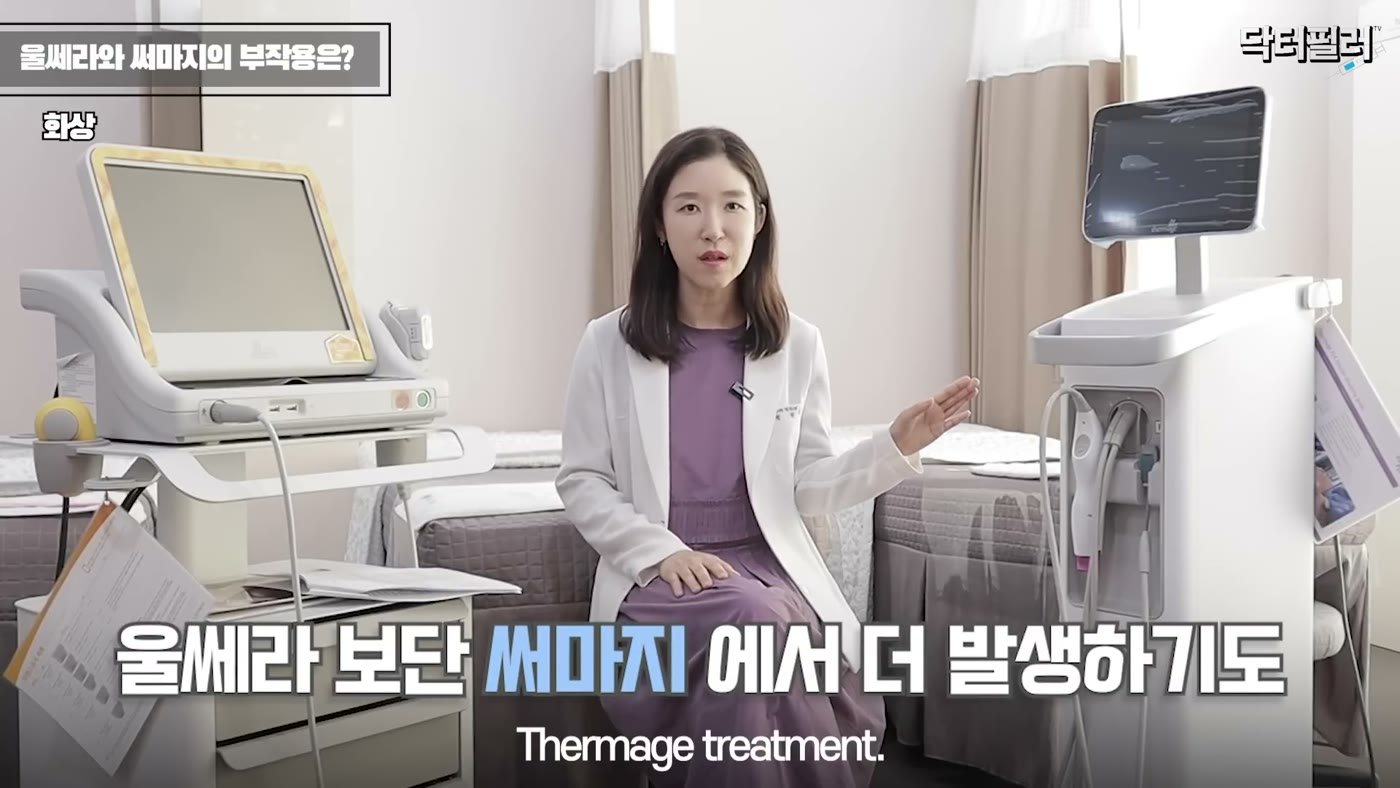
The next worry is burns. This is a side effect that can show up a bit more with Thermage. It tends to happen when the practitioner gets greedy and wants to give you a stronger result. A low setting means a weaker effect, so out of a wish to do well by you they crank it up hard, and now and then that causes a burn.
A blister is very uncomfortable for patients, but don’t worry too much. A burn from Thermage or Ultherapy heals without a mark if you follow your dermatologist’s treatment.
Genuine vs Refurbished Thermage Tips: What a Dermatologist Thinks 04:08–05:33
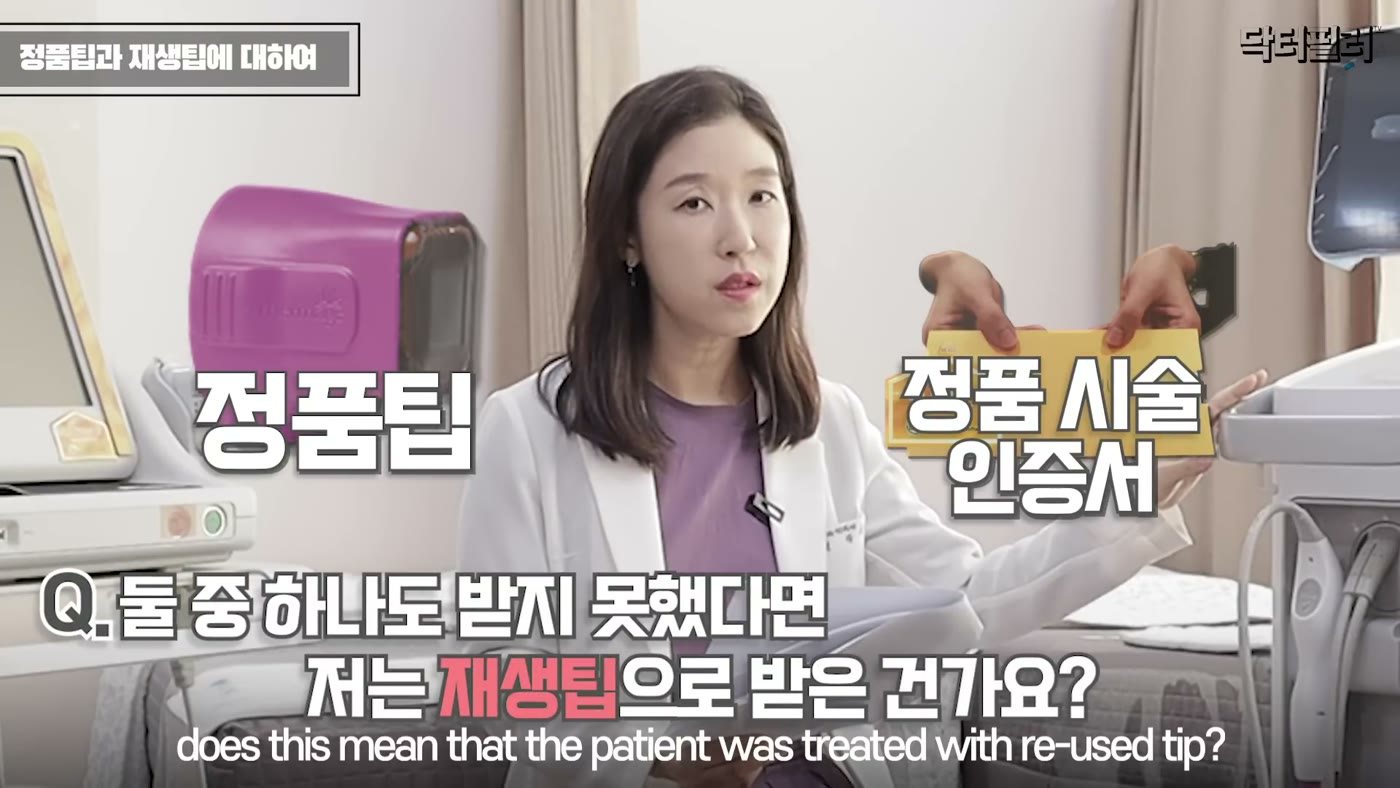
One more issue is the recent controversy over genuine tips. Most clinics now advertise that they use genuine tips, so let me ask: what share of clinics do you think use refurbished tips, the so-called illegal ones? 50-50? 70-30?
Here’s what I think. Almost every dermatologist today uses genuine tips, and most don’t know where refurbished tips are even sold, and aren’t interested. A genuine tip is nothing special. It’s the obvious baseline. If you weren’t handed a genuine tip or a certificate after Thermage, that doesn’t mean it was refurbished. It was so obvious that it may simply not have been mentioned.
And a burn after Ultherapy or Thermage doesn’t prove a refurbished tip either, because a mild burn can happen with a genuine tip too, for the reason I gave earlier. One more difference: the Thermage tip is single-use, so it can be handed to you after the treatment, while an Ultherapy tip is used on several patients, so it can’t be.
Do Ultherapy and Thermage Actually Work? 05:33–06:23

They’re expensive, so do they really work? Yes, the effect is clear. With Ultherapy, some people are surprised that their face tightens up on the spot, and some find their face gets much smaller. Thermage builds over 1 month, 2 months, 3 months. Firmness rises, your complexion brightens and your face turns plump and bouncy.
Still, visible results can be a bit weaker for some people, and satisfaction is subjective. Some people may even get better results from a simple filler treatment than from these expensive devices, which is why you need to talk to a specialist. Neither one may give you the perfect result you imagine on its own. But if you can afford it, getting it regularly is clearly a good anti-aging treatment.
Takeaway 06:23–07:16
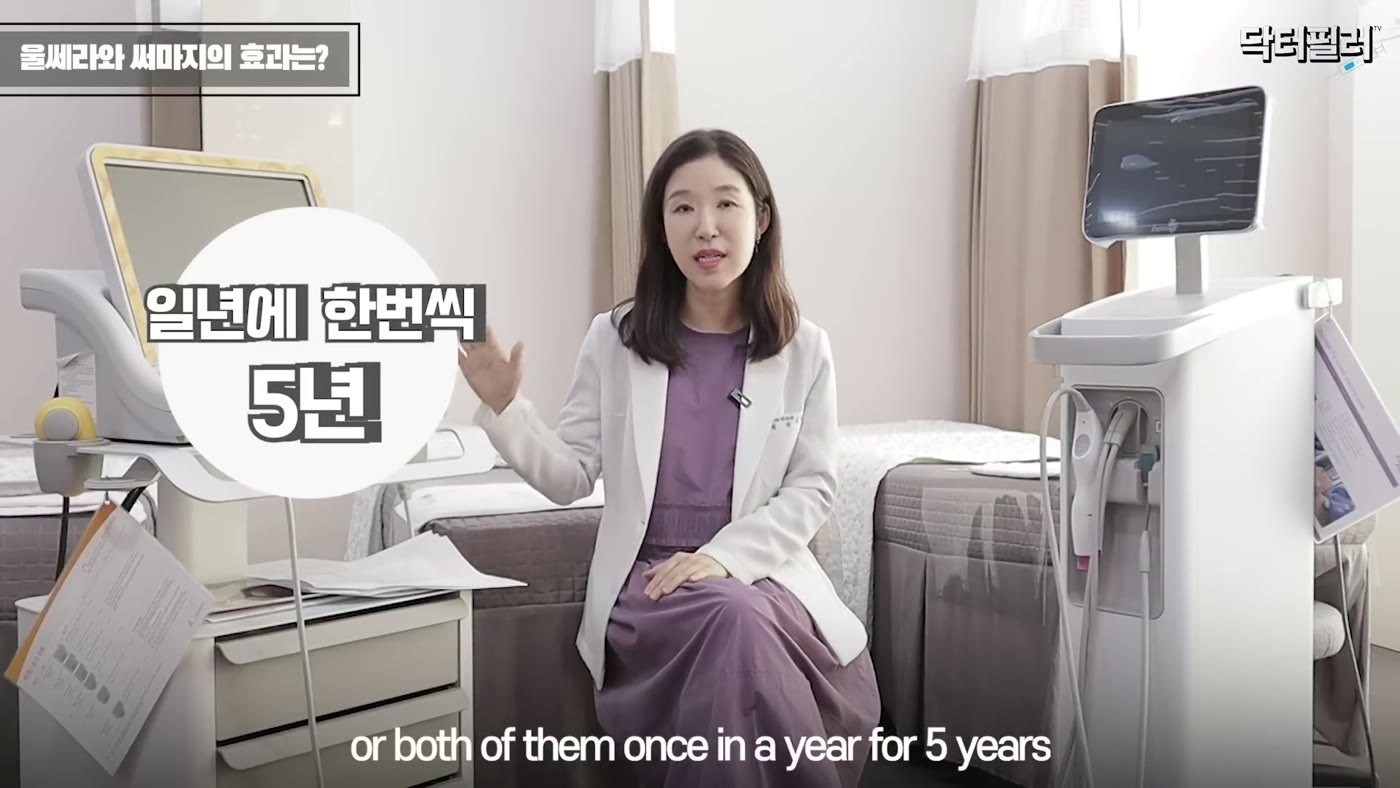
Compare someone who got one or both once a year for 5 years with someone who got nothing for 5 years. After 5 years, there will certainly be a difference in aging. Apart from some swelling, there’s almost no visible sign afterward, which is why celebrities rely on these treatments for anti-aging.
Have you decided which one to get? Good, but it can change. You might think you lack volume and go in for Thermage, only to find the areas that need volume have none and the areas that shouldn’t have volume have plenty. Then Ultherapy may be recommended instead. So go to a dermatologist with an open mind.
Common questions
What is the difference between Thermage and Ultherapy?
According to Dr. Filler, Ultherapy uses ultrasound heat in the deep SMAS layer for contouring, while Thermage uses radiofrequency heat in the shallower dermis to build collagen and firmness.
Which is better for sagging jowls, Thermage or Ultherapy?
Dr. Filler says Ultherapy suits sagging flesh above the nasolabial folds, the so-called bulldog jowls, and a sharp V-line. Thermage suits thin, loose skin with fine lines and large pores.
Does Ultherapy cause hollow cheeks?
Dr. Filler says it can, because Ultherapy is powerful, but says it is a predictable side effect that can be avoided by choosing where to focus the treatment.
Can Thermage burn your skin?
Dr. Filler says a burn is a side effect that can show up a bit more with Thermage when the setting is pushed too hard, and says it heals without a mark with a dermatologist’s care.
Do Thermage and Ultherapy really work?
Dr. Filler says yes. Ultherapy can tighten the face right away, while Thermage builds firmness over 1 to 3 months, but results and satisfaction vary from person to person.
Keep reading
- What really fixes dehydrated skin Dehydrated skin explained: Jamti says the cause is barrier damage, not missing inner moisture, and why barrier cream beats low-molecular hyaluronic acid.
- How to apply sunscreen correctly How to apply sunscreen the right way: a Seoul National University dermatologist covers wearing it indoors, how much to use, SPF vs PA and mineral vs chemical.
- Why fakes show up on official Amazon listings Fake K-beauty on Amazon usually comes from third-party sellers taking the Buy Box on a real listing. Here's how it happens and how to check the seller first.